
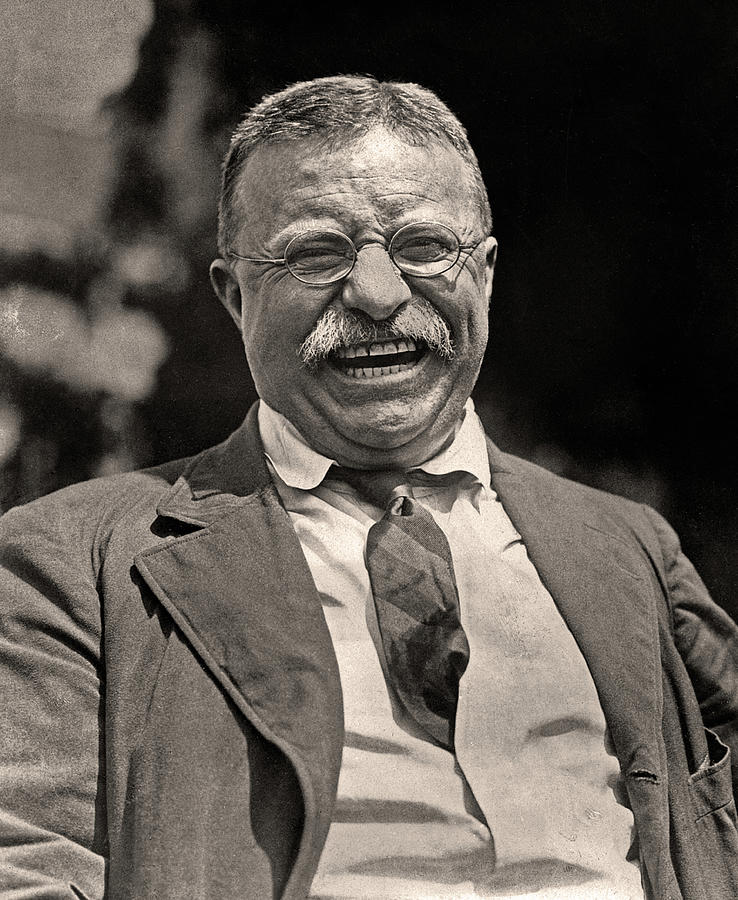
I’ve been listening to hours of three very big, thorough Teddy Roosevelt biographies on Audible (jealous? I know you are…). And it’s got me thinking a lot (even more than usual) about discomfort.
I can’t really explain what drew me to them. A bunch of small travel encounters with historical places he’d been mixed with a genuine curiosity about the man.
And once I started the series, I couldn’t really stop. I need to know the ending — does he make it out alive?!
 What I’ve Learned
I’ve learned that he was a flawed, complicated, and incredibly inspiring man. Pretty much anyone who met him was wowed by him.
I’m not saying he was perfect. I’m a vegetarian and the man hunted and slaughtered more animals in his lifetime than most people will see in theirs. But that doesn’t mean I automatically tune out all the lessons his fascinating lifetime can offer.
One thing he believed in was getting at the heart of an issue. And if a conflict couldn’t be avoided, stop trying to avoid it.
This was, of course, an idea that accidentally helped start the first World War. (See above when I mentioned “flawed.)
Outside of an emotionally charged, complicated diplomatic arms race…I think his idea is actually really helpful.
Lean In Rather than Avoid
We spend so much time trying to avoid conflict. We try to sweet talk our way into temporary alliances that get us through small moments.
And, listen, sometimes that’s necessary. Compartmentalization is a helpful tool.
But constantly kicking the ball down the field isn’t helpful. At some point, someone needs to take the shot.
Metaphorically. Again, I’m not a fan of this being applied to war.
I’d Rather Everyone Just Get Along
Truthfully? I love a good conversation. I love when things flow. It feels so good when people are being honest, vulnerable, kind, and present.
I’ve learned to love a good fight, too. Not as much (the connected conversations obviously feel better). But if I need to say something hard, it literally pains my body to keep it internally for too long. I need to get it out and to let the result of what I’m saying happen so we can get it over with.
I’ve learned from tried-and-true practice that it’s worth it.
The Secret Sauce
There’s a key, though, to doing it right. And that’s curiosity.
I don’t walk into a tough conversation with guns-a-blazin’ ready to tear down my enemy and walk out having heard no part of their side.
That doesn’t work. And it doesn’t feel good. It’s not worth it.
Instead, I walk in having taken the time to get some clarity on exactly what I’m actually feeling. That requires curiosity.
I use my own self awareness to get curious if there are any personal triggers that are coming up. I wonder what story I’m telling myself. I imagine what I hope the other person will say, and what the best possible outcome could be. And what might happen if we reach that outcome?
Once I’m clear on myself, I get curious about the other person. I wonder where they’re coming from. Why they might say or do what they’re saying or doing. What if they don’t realize it? What can I learn from this about how they see the world?
The curiosity makes all the difference. It changes the conversation from a war to a non-violent skirmish. Tears may still fall. Egos may get bruised. But healing happens. And so does growth.
And peace. A longer-lasting pace. A secure peace. A confident peace.
Now, if you’ll excuse me, I have to go listen to hours more of highly-detailed stories about a dead dude with weird teeth who liked to kill animals.